

Healthylife’s Guide to the rise of High-Efficiency Foods
For decades, the Australian food industry has been shaped by the pursuit of convenience, flavour, and indulgence. Today, our market is undergoing a structural pivot – moving away from general wellness towards targeted functional health.
This move is accelerated by the adoption of weight-loss medications and a heightened consumer focus on foundational performance, specifically protein, fibre, and hydration. With estimates indicating upwards of 500,000 Australians using GLP-1 medications for weight management, shopping habits are evolving. Across the broader retail landscape, this shift represents an opportunity for food manufacturers to consider ways to shift their portfolios for a consumer base where volume changes are driving a demand for higher nutritional density.

Evolving basket dynamics and high-efficiency foods
The rapid adoption of GLP-1 medications is changing how consumers interact with food. As appetite suppression and reduced “food noise” take effect, several macro trends are emerging across the retail market:
Driven by growing awareness of gut health, weight management, and satiety as “nature’s appetite controller,” fibre has successfully transitioned from a traditional digestive aid to a high-demand premium ingredient. In the minds of consumers, fibre is officially the new protein.

Basket dynamics are changing
What consumers are putting in their baskets is changing, with a shift to include more nutrient dense products including high-protein, fibre-rich essentials.

Discretionary intake is falling
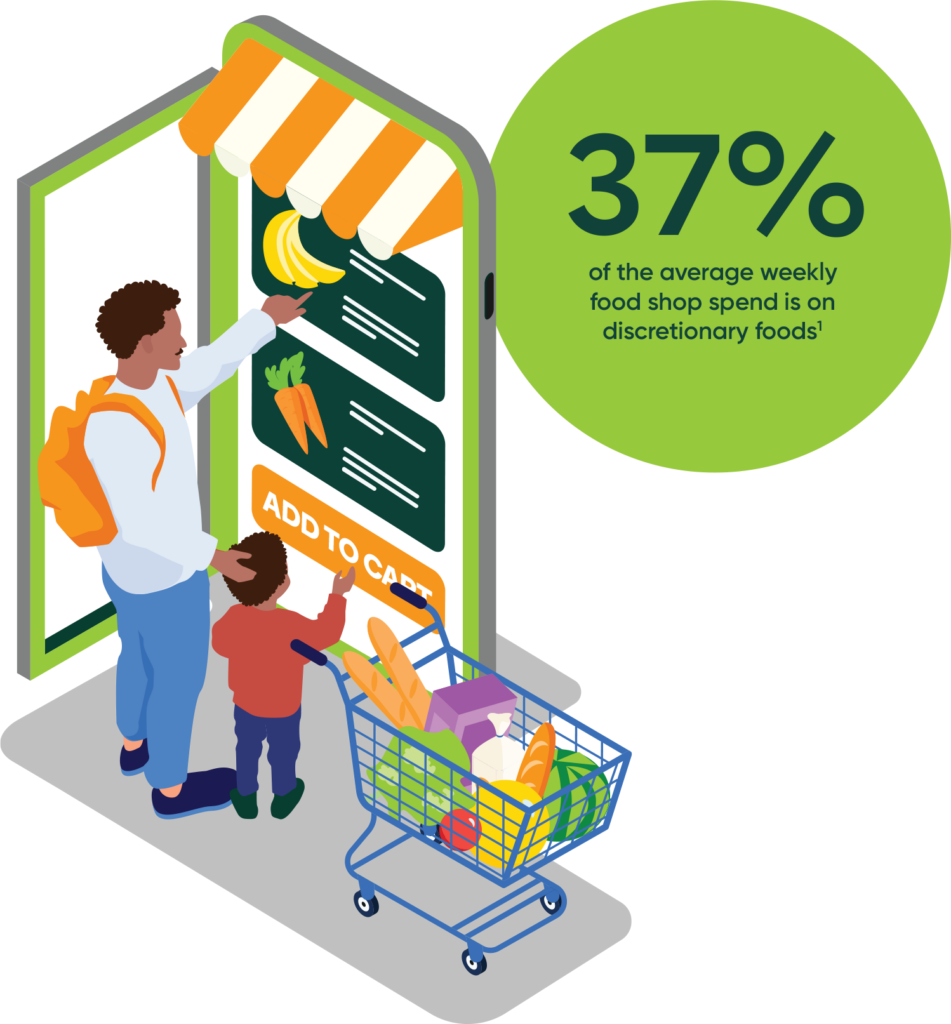
Spending across traditional discretionary categories, such as chips, sweet biscuits, and sugary drinks, is moderating.

Core nutrition is prioritised
Consumers are increasingly prioritising core nutrients, looking for high-protein and high-fibre options to maintain lean muscle mass and overall nutritional balance.
This is not a temporary fad. Over the last quarter, high-protein yoghurts and desserts grew by 45 per cent, and we reached record sales of protein muesli bars over the last six months.
With oral formulations anticipated to enter the Australian market in coming years, cold-chain and administration barriers will decrease, likely expanding these consumer behaviors across broader demographics.
The product imperative
Market demand is pointing toward food-first solutions. While protein-fortified functional products continue to grow, broader opportunities exist in convenient, smaller-format meals and whole-food options centered on core dietary groups:
- Whole grains, legumes, nuts, and seeds
- Lean proteins, seafood, and poultry
- Dairy bases like cheese, milk, and yogurt
- Whole fruits and vegetables
Bridging the “Health Confidence Disconnect”
While Australians’ express strong intent to eat well, data from Healthylife’s Living Healthy Report 2026 highlights a persistent gap between perception and purchasing behaviour:
- The perception: 89% of Australians believe their immediate environment supports them in making healthy food choices.
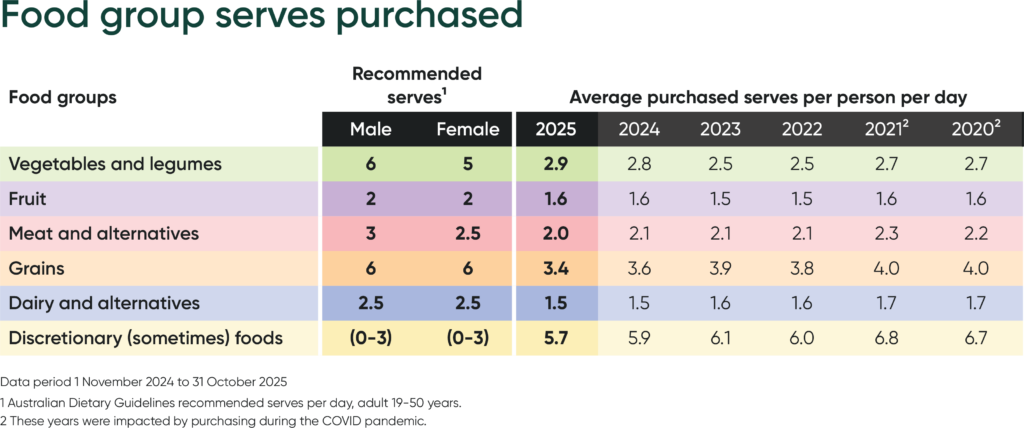
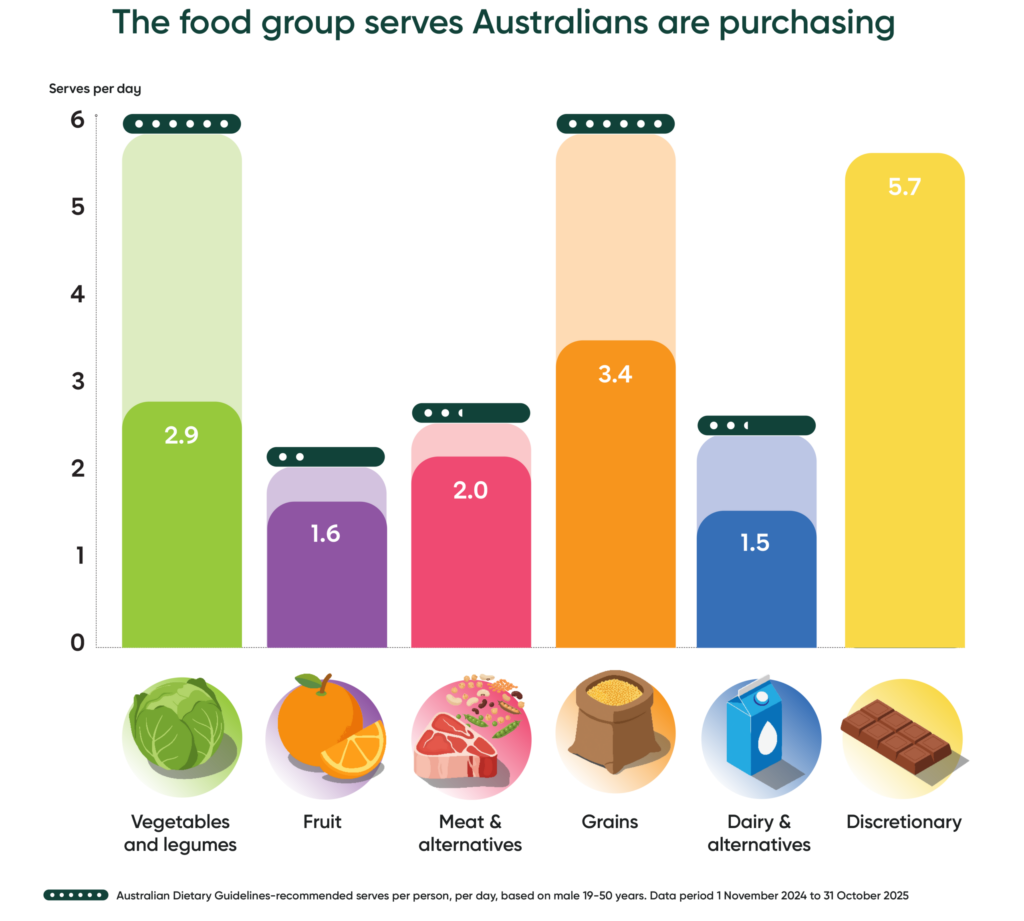
- The reality: Food purchasing data shows that, on average, Australian households fall short of recommended daily servings across all core food groups.
- The disconnect: On average, shoppers purchase 5.7 servings of discretionary food per day compared to just 2.9 servings of vegetables.
As consumers re-evaluate discretionary spending, a key industry question remains: Are shoppers replacing discretionary calories with nutrient-dense core foods? Products that help bridge this gap, through transparent labelling or convenient core-food formats, are well-positioned to meet evolving consumer expectations.
Embracing digital tools to guide the basket
To help shoppers navigate specific nutritional goals, digital utilities are playing an increasingly active role. Tools such as Healthylife’s Food Tracker offer shoppers visibility into how their baskets align with the Australian Dietary Guidelines.
Key industry opportunities aligned with this digital shift include:
- Clear on-pack metrics: Highlighting core food contributions, like protein and fibre content.
- Nutritional alignment: Aligning products with established dietary guidelines to feature positively within digital health and basket-tracking utilities.
- Driving trust through transparency: Leveraging verified dietary standards to build long-term brand credibility with health-conscious shoppers.



Looking ahead
The retail landscape is expanding from purely volume-driven demand to a model increasingly focused on nutritional efficiency and quality. To explore more data and insights, download the full Healthylife Living Healthy Report 2026 here.
Read also

 6 min read
Trading pixels for plates