

Growing the perfect cherry: How Howard Hansen’s love of the game led to long-term success
Growing the perfect cherry: How Howard Hansen’s love of the game led to long-term success
In the heart of Tasmania, driven by a profound passion for product and an unwavering commitment to innovation, Hansen Orchards produces some of the nation’s best-quality cherries.
To understand how their dedication to cultivating exceptional products is bolstered by their strategic adoption of cutting-edge technology, we sat down with Managing Director Howard Hansen, as he peels back the curtain of the competitive cherry industry.
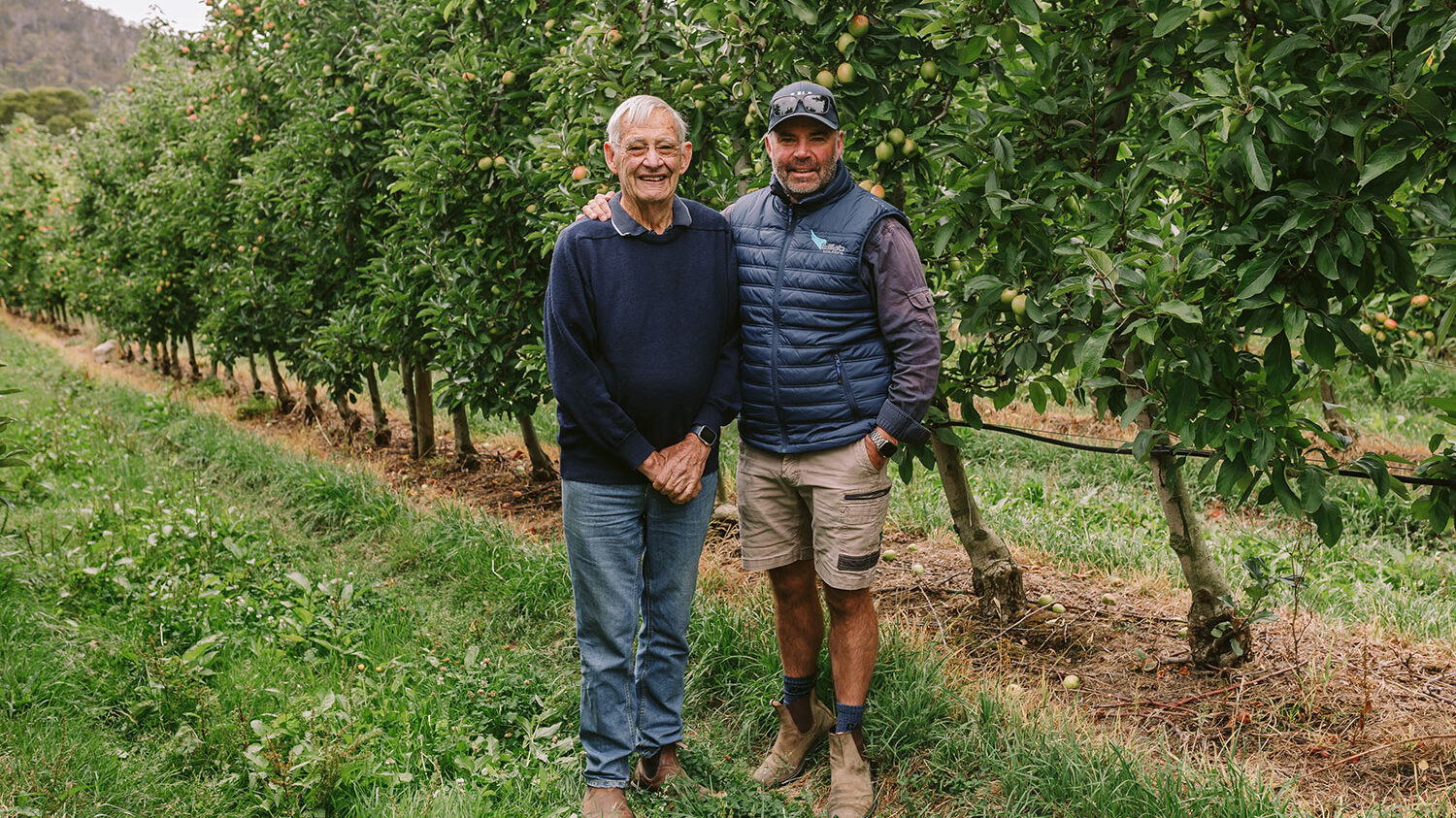
Q: Howard, your family has a long history in fruit growing. What sparked your passion for cherries, and how did Hansen Orchards come to focus on this particular fruit?
Howard: Our family has been growing fruit in Tasmania for about four generations, and we’ve partnered with Woolworths for over 60 years, initially supplying apples. My passion for cherries really began in my final year at university in 1994. I did a research project then, looking at the opportunity for growing late cherries in Tasmania. We planted our first 400 cherry trees in 1995, and now we have about 300 hectares planted in Tasmania. The shift towards cherries was a diversification strategy. By the mid-1990s, the global demand for Tasmanian apples had changed, and we were looking for new opportunities. Cherries looked like a really good one, especially as most cherries in January and February were being imported from New Zealand. I went to Woolworths with a business plan in the late 1990s, and their support and confidence gave me the impetus to start investing in cherries.
Q: Tasmania is often referred to as the “Apple Isle.” How did you convince Woolworths to support your vision of replacing imported New Zealand cherries with Tasmanian-grown ones?
Howard: When my father started in our business, there were 2,000 apple growers in Tasmania. By the time I started in the mid-1990s, it was down to only 200. The world didn’t need Tasmanian apples like they had in the past, so we needed to diversify. Cherries presented a great opportunity. We approached Woolworths with our plan to supply cherries during January and February, directly competing with the New Zealand imports. They were very receptive and said, “If you can grow cherries in January and February, we’d love to support you by purchasing from you and supplying them around the country.” That really gave me my start.
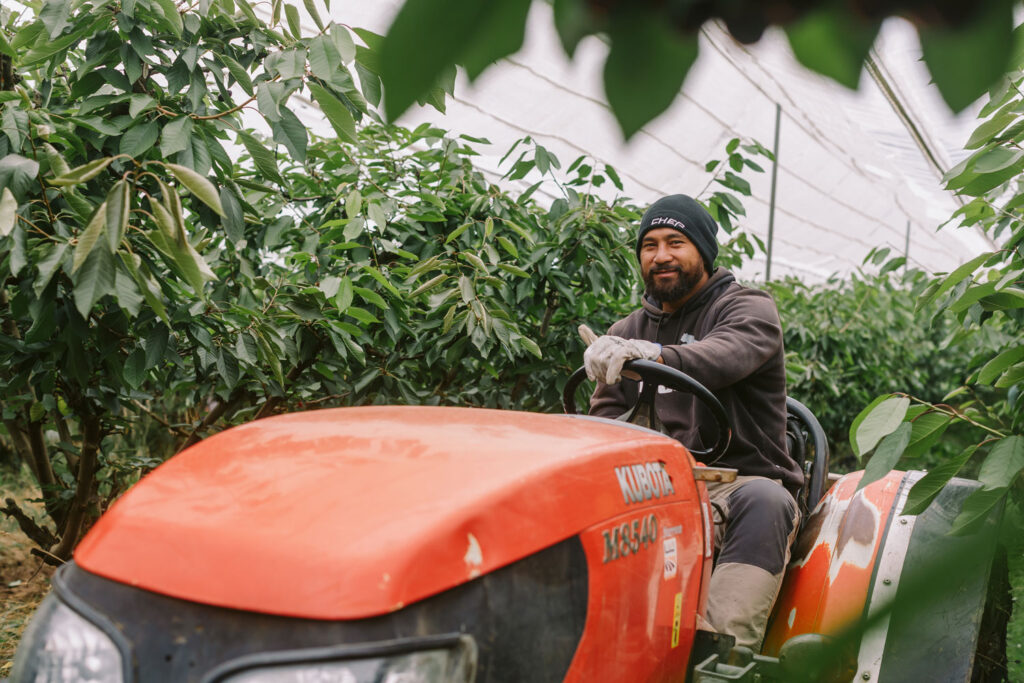
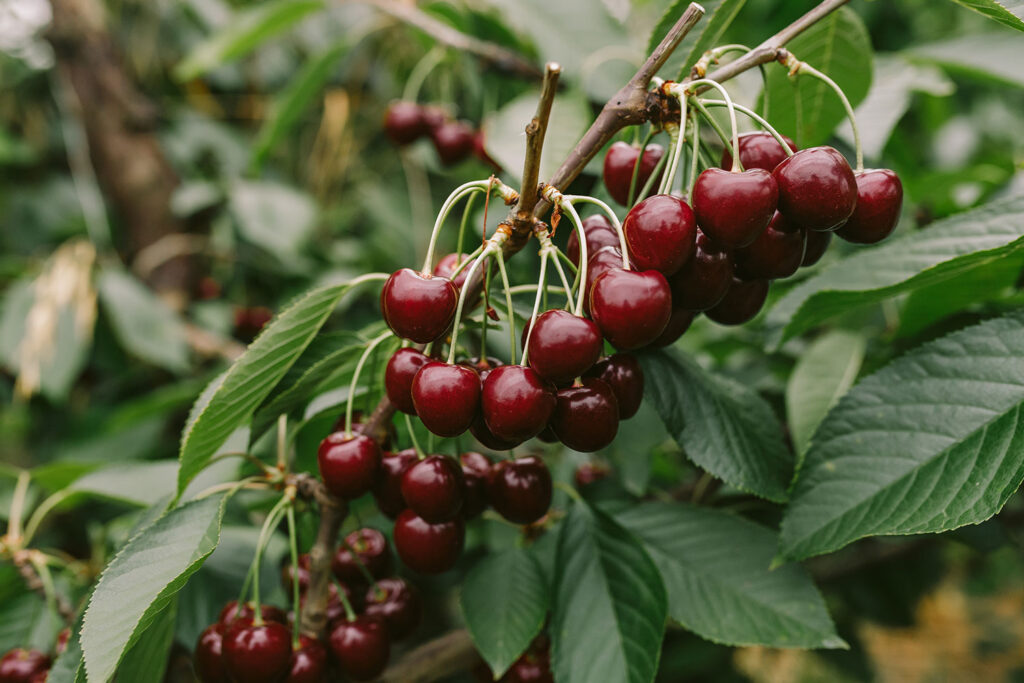
Q: Growing cherries has its challenges, particularly rain. How has Hansen Orchards addressed this to ensure a reliable, high-quality product for Woolworths?
Howard: Rain has historically been the biggest challenge for cherries, especially in our fairly wet environment here in Tasmania, with about 30 inches of rainfall per annum. Over the last 15 years, we’ve implemented a program to put all of our cherry trees under raincovers. These plastic raincovers protect the trees and fruit from frost, wind, birds, and most importantly, rain. This makes us an extremely reliable supplier to Woolworths. We can tell them in advance of the season exactly how much volume we’ll have each week, allowing them to build their marketing plans around that certainty.
We choose to partner with key partners like the Hansen’s because their modern, quality focused growing methods give us stability and the best quality. This helps us forecast way better for the Christmas and Summer trading periods so that we can guarantee the highest quality cherries hit our stores for our customers.
– Daniel Scott, Category Manager – Berries, Cherries & Grapes
Q: Beyond the orchard, what steps are taken in your packing facility to maintain the quality and freshness of your cherries?
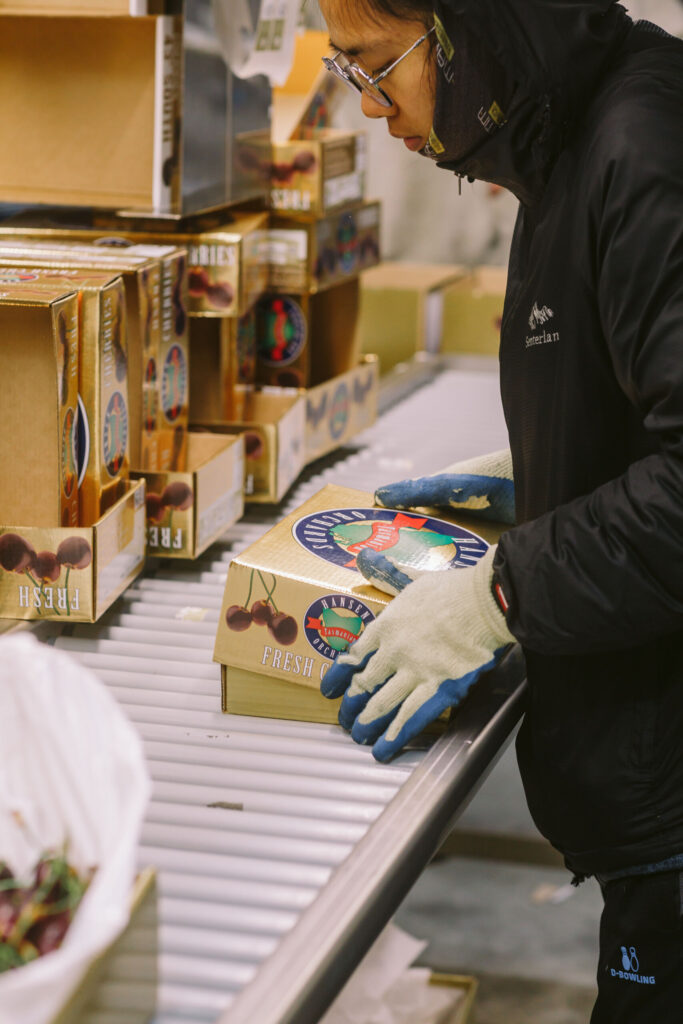
Howard: Quality truly starts in the orchard with the rain covers protecting the fruit. Once harvested, the number one priority is cold, cold, cold. We hydrocool the fruit within an hour of it coming off the tree, reducing its temperature below 5 degrees Celsius, regardless of the outside temperature. We then aim to pack them within 24 hours, so every cherry is off-site and on its way to a customer within 24 hours of being picked. Speed to market is crucial because cherries don’t have a starch reserve, giving them a very short shelf life.
Q: Your packing facility is ‘tech-heavy’. Can you elaborate on how this technology relates to your care for the cherries and helps lead the market?
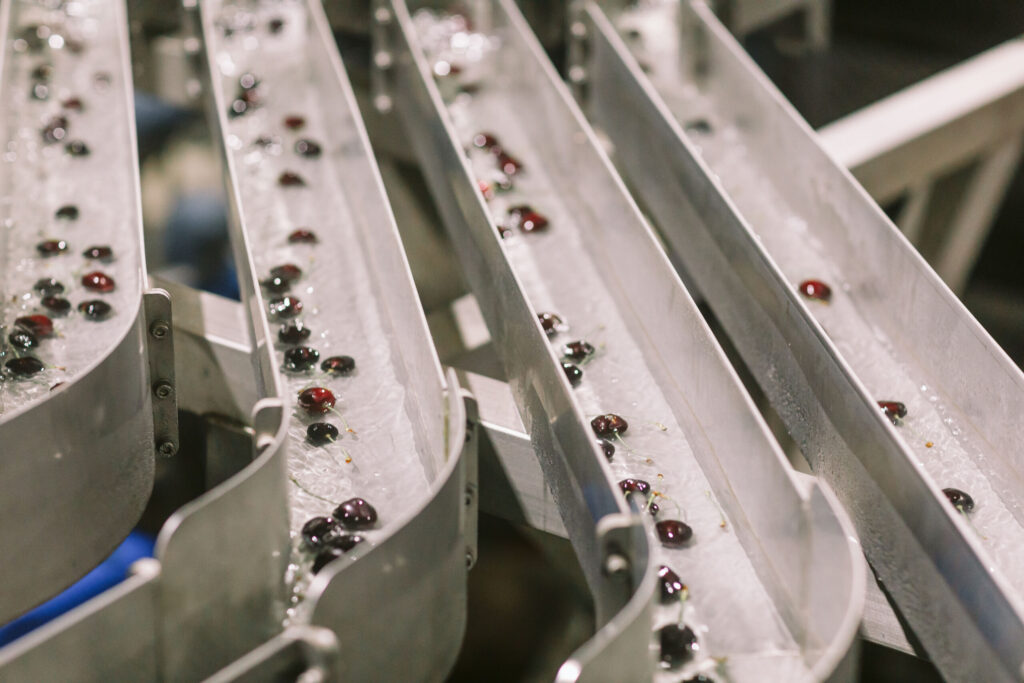
Howard: In Australia, wage rates are very high compared to our competitors globally, so we rely heavily on technology to minimise labour inputs and maximise quality. In our packing facility, we handle about 500 cherries per second, taking up to 36 images of each one. That’s approximately 18,000 images per second, which allows us to accurately classify cherries based on their characteristics. This ensures that when you buy them at Woolworths, every cherry is of perfect quality and looks consistent.
The best thing about this technology is the consistency it provides. Previously, quality decisions relied on 400-500 people, and consistency was a challenge due to varying moods or tiredness. With cameras and computers, the job is consistent 24 hours a day. Everything we do, from rain covers in the orchard to cold chain management and advanced technology, is motivated by delivering the best possible eating experience to the customer.
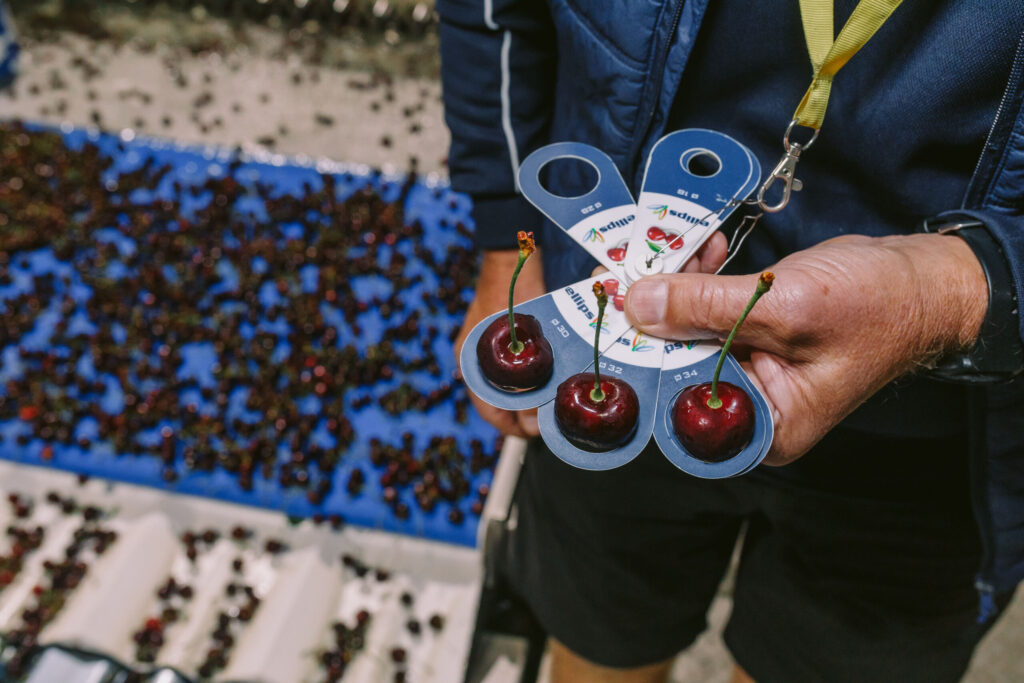
We’ve partnered with Ellips, a Dutch company, who we believe have developed some of the best camera and computer technology in the world for accurately, quickly, and efficiently segregating cherries by quality. This technology allows us to pack at volume and with accuracy, up to 15 tonnes of cherries per hour. We’re only picking for six weeks, so getting the entire crop through the facility and to the customer as quickly as possible is vital.
Q: How has this investment in technology, particularly with partners like Ellips and Elifab, allowed Hansen Orchards to lead the market in the cherry space?
Howard: Our history in cherries has always been about finding innovative and more labour-efficient ways to segregate fruit by size, quality, and firmness. About 15 years ago, it became clear that cameras were the only way to do this accurately. As camera technologies and software improved, we moved to full defect sorting, reducing the need for extensive human quality checks. Without this technology, we’d need another 400-500 people per shift, which isn’t feasible due to availability and cost. This technology keeps us competitive and economically viable.
We chose to work with Ellips and Elifab from the Netherlands and Spain because they were willing to listen to our input. We’ve been packing cherries for nearly 30 years and have our own ideas. Our fruit is often larger and more valuable, with overseas customers buying them as gifts, so their expectations are higher. Ellips and Elifab were suppliers prepared to listen and allow us input into the technology’s design. This technology allows us to pack at volume and with accuracy, processing 500 cherries per second and taking 36 photos of each to assess external and internal quality.
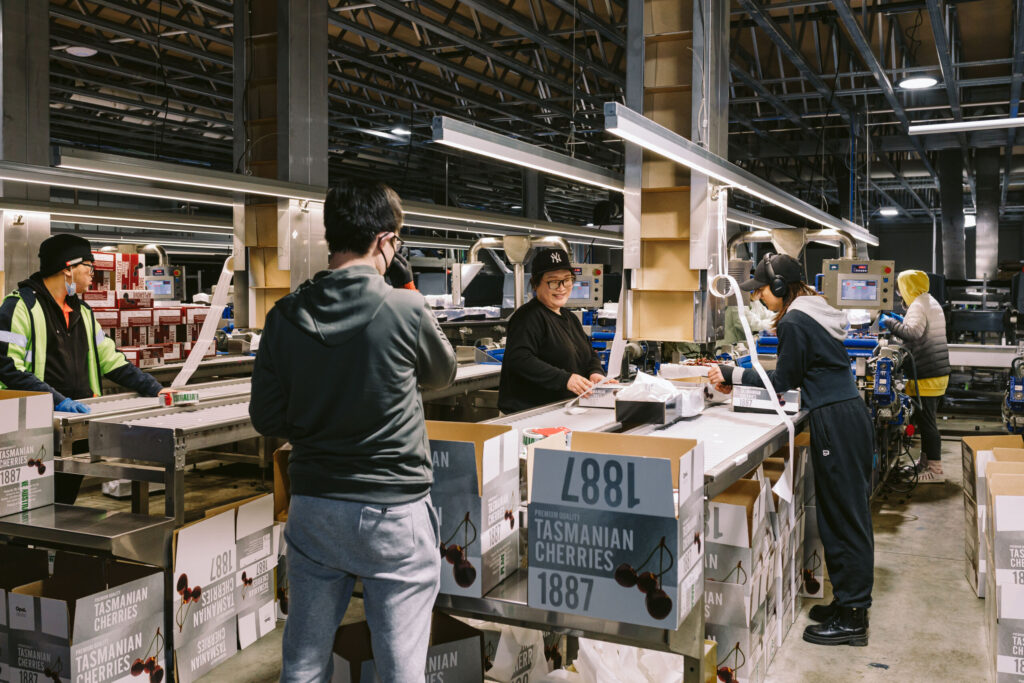
Q: Beyond technology, what are Tasmania’s key competitive advantages for growing cherries, and how does Hansen Orchards leverage these for the Australian consumer?
Howard: Tasmania has a couple of key competitive advantages. Our southern latitude means we’re the last supplier in the world to start harvesting cherries in January and February. Our cool maritime climate also makes it easier on the trees, providing a more moderated environment without extreme heat, cold, wet, or dry. This leads to a slightly longer growing season, allowing us to grow slightly larger, darker, crunchier, and sweeter fruit.
For Australian consumers, this means that as mainland Australian cherries finish around Christmas, Hansen Orchards steps in to supply cherries throughout January and most of February. This extends the length of the Australian cherry season, offering consumers a continued supply of high-quality Tasmanian cherries after Christmas, which we believe are some of the biggest, best, and most pleasurable eating experiences of the summer. We’re 100% self-sufficient for energy in our facility, with solar panels covering the roof, and we recycle all the water we use, making it a very sustainable setup.
Q: What is the most satisfying part of your job at Hansen Orchards?
Howard: The most satisfying part of the job is being in this facility when it’s running at full capacity with absolutely fantastic-quality fruit. Looking around and seeing everyone working hard with the same goal of getting high-quality fruit in the box, out the door, and to our customer as quickly as possible is incredibly rewarding. Cherries are the signature of summer, and we want to encourage Australians to look for Tasmanian cherries straight after Christmas for that exceptional eating experience.
Read also

 6 min read
How Premier Fresh became a Premier Partner